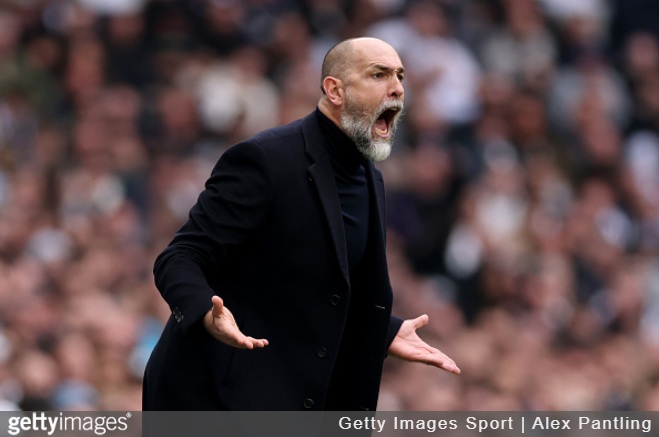
The Tottenham Hotspur Stadium was supposed to be a rallying point on Sunday, March 22, 2026. Instead, it became a mirror reflecting the depth of Spurs’ crisis.
Nottingham Forest’s emphatic 3–0 win in what was effectively a relegation six‑pointer did more than dent Tottenham’s survival hopes; it crystallized a season spinning alarmingly out of control. Spurs ended the day one point above the relegation zone, winless in the Premier League in 2026, and facing the very real prospect of falling out of the top flight for the first time since 1978.
This was not meant to be the script when Igor Tudor was appointed in mid‑February.
Hired until the end of the season after the sacking of Thomas Frank, Tudor’s mandate was brutally simple: stabilize performances, inject intensity, and steer Tottenham away from danger. Instead, the Croatian has overseen a run that has deepened uncertainty rather than eased it, losing five of his first seven matches in all competitions and failing to arrest a league slide that now feels almost terminal.
From Frank to Tudor: Change For the Sake of Change – For the Worse
Thomas Frank’s dismissal came with Spurs hovering precariously above the bottom three after a prolonged slump. Results had dried up, confidence had evaporated, and patience in the boardroom finally snapped. Tudor arrived with a reputation as a short‑term “fixer”, someone accustomed to stepping into turbulent situations. Yet what has unfolded at Tottenham has exposed the limits of that theory.
Under Tudor, there have been fleeting signs of fight — a late draw at Liverpool and a morale‑boosting Champions League win over Atletico Madrid — but those moments have not translated into league points. The Forest defeat brutally underlined that inconsistency. Spurs started brightly, hit the woodwork twice, then collapsed once Forest took the lead. By full‑time, boos echoed around the stadium, and Forest had leapfrogged Tottenham in the table.
The pressure on Tudor is now intense. Reports on the day of the Forest loss openly questioned whether Tottenham could afford to persist with a coach whose appointment has yet to yield tangible league improvement. The grim irony is that another managerial change, after already sacking Ange Postecoglou and Frank within a year, would underline the very instability that has helped land Spurs in this mess.
The Table Tells a Relentless Story
After 31 matches, Tottenham sit just above the relegation line with 30 points, locked in a six‑team dogfight that includes Nottingham Forest, West Ham United, Leeds United, Burnley, and Wolverhampton Wanderers. What makes Spurs’ position particularly alarming is form: they are the only Premier League side yet to win a league game in 2026.
Forest’s win in North London was not merely symbolic. It moved them above Spurs and reinforced the sense that some rivals are learning how to survive ugly, while Spurs continue to falter when the stakes are highest.
A Run‑In That Offers No Mercy
The remaining fixture list provides little comfort. Tottenham’s upcoming games include trips to Sunderland and Wolves, home matches against Brighton and Leeds, and daunting away fixtures against Aston Villa and Chelsea. Each carries its own peril. Sunderland and Leeds represent direct relegation rivals — six‑pointers where defeat could be catastrophic. Wolves, meanwhile, are one of the bottom‑six sides in form, having picked up valuable points against top opposition, though they remain at the bottom at this stage.
Compare that with Spurs’ rivals’ schedules and the picture grows darker. Leeds, while nervous, have a comparatively kinder run‑in on paper. West Ham have shown resilience and are grinding out draws and the occasional statement result. Even Forest, despite their flaws, now have belief after winning in North London.
Key matches loom as season‑defining moments. Tottenham’s home clash with Leeds could decide who stays afloat. The away trip to Wolves may pit two teams moving in opposite psychological directions. And any points dropped against Sunderland would likely plunge Spurs directly into the bottom three.
The Weight on Tudor’s Shoulders
For Tudor, the equation is stark. He was not appointed to build a long‑term project, but to deliver short‑term survival. Every match now feels like a referendum on his tenure. His assistant, Bruno Saltor, insisted after the Forest defeat that the squad “cares” and that there is still belief inside the club. Yet belief without results is an empty currency at this stage of a relegation fight.
The deeper concern is that Tottenham look mentally brittle. Conceding first so often, failing to respond to setbacks, and carrying the visible weight of expectation at home all point to a team paralyzed by fear. Tudor’s challenge is not merely tactical; it is psychological as well.
A Defining Moment for Tottenham Hotspur
Relegation is still far from inevitable. A single win can transform the table and the mood within the club.
But Tottenham are running out of time, margin for error, and goodwill. The Forest defeat was more than three lost points — it was a warning that reputation counts for nothing when survival is on the line.
If Spurs are to avoid the unthinkable, Tudor must find a way to turn anxiety into urgency and chaos into clarity, fast. Otherwise, this season will be remembered not just as a managerial failure, but as the moment Tottenham Hotspur finally paid the price for years of drift, confusion, and short‑term thinking.
A season in the Championship looms as a very realistic prospect if something doesn’t change, soon.
Embed from Getty Images