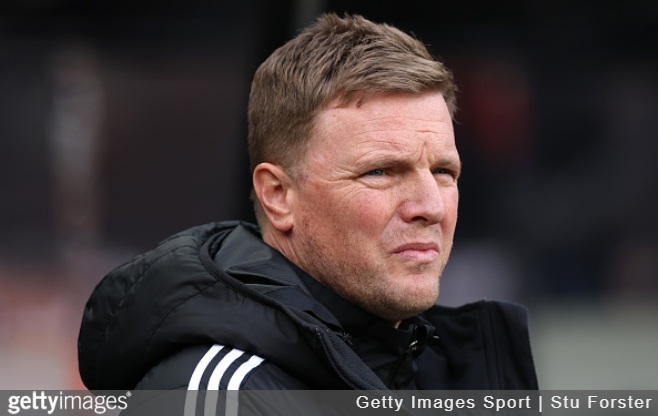
Newcastle United’s collapse this season raises an uncomfortable but unavoidable question: is Eddie Howe really the right man to take the club forward? After another dispiriting defeat, this time at home to Bournemouth, the gap between what Newcastle hoped to be and what they have become has never felt wider.
European qualification is now a distant possibility, and instead of building momentum, the Magpies appear to be sliding further into frustration and dysfunction. Five home defeats in six matches tell a damning story, and performances have become so familiar in their failings that even Howe now admits watching his team is “repetitive and painful”.
That sense of going around in circles is troubling. Howe speaks openly about the same mistakes being repeated week after week, the same explanations being offered after every defeat, and the same lack of progress despite having more time on the training ground. Losses to Crystal Palace and Bournemouth were supposed to mark improvement; instead, they underlined stagnation.
Perhaps most revealing was a moment not on the pitch, but in Howe’s post‑match press conference. Asked whether his players shared the same internal drive and urgency that he feels, Howe made a long pause before responding. His eventual answer — that he “believed they do” — felt hesitant, and made more striking by the fact that days earlier he had spoken about only selecting players who were fully committed to the club. The hesitation said more than the words.
Support inside St James’ Park remains, for now. Howe’s name was sung loudly during the game as supporters tried to lift both manager and team. Yet patience is wearing thin, and it is impossible to ignore the growing sense that the manager is asking more of players who are unable — or unwilling — to deliver it. Some performances, particularly in this match, bordered on unacceptable.
Newcastle were poor from the outset and never truly recovered. Anthony Elanga endured a disastrous afternoon on the wing, repeatedly losing the ball and failing to make the correct decisions. When he squandered a clear opportunity early in the second half with a shocking first touch that ran out for a goal‑kick, it summed up the lack of confidence and quality on show. The crowd’s calls for him to be substituted felt inevitable rather than unfair.
Embed from Getty Images
He was far from alone. Harvey Barnes offered little on the opposite flank, Jacob Ramsey drifted through midfield, and worrying body language from full‑backs Lewis Hall and Tino Livramento suggested players whose focus had slipped. Hall was withdrawn at half‑time after being beaten easily in the build‑up to Bournemouth’s opener, a change Howe described as tactical but that reflected how badly things were going.
For all the early promise and hype surrounding Hall, defensive frailties remain evident. Too many goals conceded this season have come down his side, and both he and Livramento were also culpable in Newcastle’s previous home defeat to Sunderland. These are patterns, not isolated moments.
As uncertainty grows around the squad — with Anthony Gordon omitted entirely after a minor training‑ground injury and his future unclear — confidence in an immediate turnaround is hard to summon. Even after William Osula’s equaliser, confirmed after VAR overturned an offside call, Newcastle failed to find rhythm or control.
The statistics only deepen the concern. Newcastle have now lost eight of their past 11 league matches and sit just three points above Leeds United, a team mired in a relegation battle. Boos rang out at full‑time, though notably there were still no direct calls for Howe to be dismissed.
The manner of Bournemouth’s winning goal was depressingly familiar. Another late concession, another moment of defensive chaos. Adrien Truffert was left untracked, Evanilson’s knockdown went unchallenged, and goalkeeper Aaron Ramsdale’s positioning was questionable yet again. That continued uncertainty in goal — Nick Pope having already been dropped earlier in the season — has played a significant role in Newcastle’s struggles.
Embed from Getty Images
Howe does not hide from responsibility. He acknowledges shortcomings at both ends of the pitch, admits his own frustration at repeating the same messages, and concedes Newcastle have become too easy to beat. But in football, awareness is not enough. A response is needed. Results are decisive.
Ultimately, the manager will carry the weight of this collapse, fairly or not. His position will reportedly be reviewed at season’s end, and while he is determined to stay and oversee a rebuild, the remaining five games may determine whether that decision remains his to make.
The pressure is mounting. Newcastle look disjointed, mentally fragile, and lacking belief. Howe’s commitment and honesty are not in doubt — but belief alone will not be enough. The question now is whether the people running the club still believe he is the man capable of leading them out of the wreckage.
Embed from Getty Images